
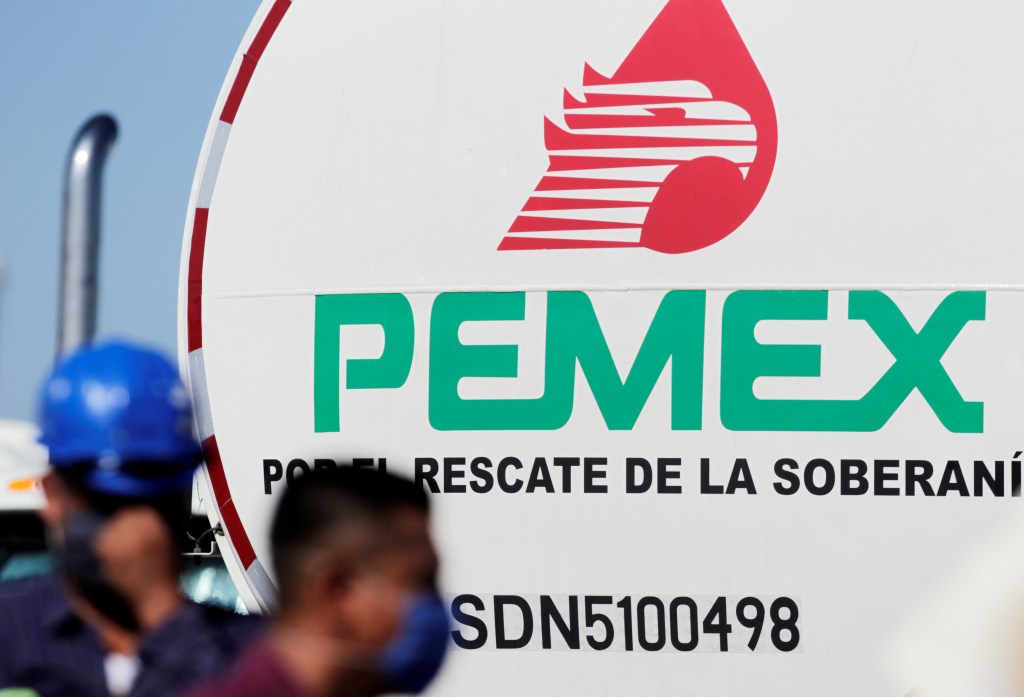
Early Friday morning, the Gulf of Mexico was set ablaze due to a rupture in an underwater pipeline, spewing a vortex of flames to the ocean’s surface. Mexico’s state owned oil company, Pemex, is believed to be responsible for what the internet has been referring to as an “eye of fire” in the Gulf’s southern waters.
Petroleos Mexicanos (Pemex) first discovered the gas leak about 150 yards offshore of the Ku-Maloob-Zaap oil field at approximately 5:15 am local time. Footage of the blaze looked surreal, almost like something from a movie set.
While the cause of the leak is still under investigation, Ángel Carrizales, director of Mexico’s oil safety regulatory agency ASEA, assured the public on Twitter that the leak “did not generate any spill,” but was still unsure of exactly what was burning.
No one was injured in the occurrence, but it took authorities nearly 5 hours to put out the flames. This is just another incident in Pemex’s long list of major industrial accidents. It’s unclear how long the pipe had been leaking, and what exactly caused the ignition of flames, but water does not catch fire very easily. Accounting for over 40% of Pemex’s daily output, the Ku-Maloob-Zaap oil field is the company’s largest producer of crude oil – meaning the pipe valve could have been leaking for days or even weeks.
Reuters reported it is quite possible that “[t]he turbo machinery of Ku-Maloob-Zaap’s active production facilities were affected by an electrical storm and heavy rains.” According to NASA, when an electrical storm strikes the ocean, electricity typically spreads horizontally across the surface – rarely does it extend vertically into the depths of the ocean floor. How did this storm generate such a monstrous effect then? Could the presence of toxic, highly combustible chemicals in the water have had something to do with it?
While the ecological impact of yesterday’s underwater combustion remains unclear, environmental damage like this just simply cannot be tolerated anymore. Miyoko Sakashita, oceans program director for the Center for Biological Diversity, lamented “the frightening footage of the Gulf of Mexico is showing the world that offshore drilling is dirty and dangerous… [t]hese horrific accidents will continue to harm the Gulf if we don’t end offshore drilling once and for all.”
In the past 24 hours, environmentalists and lawmakers worldwide have spoken out, begging world leaders to reconsider offshore drilling practices. Rep. Alexandria Ocasio-Cortez took to Twitter, mocking her fellow lawmakers for “going out on dinner dates with Exxon lobbyists so they can say a Green New Deal is too expensive.” Additionally, Hawaii Sen. Brian Schatz ridiculed his colleagues’ belief that combating climate change caused by pollution “is too expensive.”
Alternative sources of energy have proven themselves fully capable with an abundance of research to back it up. In 2018, European countries such as Denmark, Germany, and Ireland generated over 80% of their annual average energy from wind and solar power alone. Furthermore, a study conducted by LUT University in Finland simulated a successful global model for the world to operate on 100% renewable energy by the year 2050.
After instances like yesterday, the time for action is now. Sky-rocketing temperatures in Oregon and Canada were last week’s headlines – who knows what next week’s will be? Mother Nature is speaking to us, and it’s high time for us to start listening.
 wesmaxwell.blog
Leave a comment